
Australia
Harvesting as the northern hemisphere heads into winter.
Overview
Australian agriculture is built to export: most of what the country produces is sold overseas. On the driest inhabited continent, where rainfall is highly variable and drought is frequent, wheat, barley, canola, cotton and beef come from large-scale, mechanized and highly technical farming that has learned to do more with little water.
Two features stand out for a global investor. Winter grains are harvested through the southern spring and summer, counter-seasonal to the northern hemisphere—diversifying the calendar and cash flows. And in the Murray–Darling Basin, water is an asset in its own right: water rights have been unbundled from land and are traded on a regulated market. On the other side of the ledger is a rainfall pattern that demands a structure able to ride out runs of dry years.
Production systems
How the land produces.
Dryland winter grains
Wheat, barley and canola—the country’s three largest winter crops—are sown in autumn and harvested through spring and summer, across a belt running from Western Australia through South Australia, Victoria and New South Wales to Queensland. Without irrigation, yields hinge on in-season rainfall and stored soil moisture.
Cotton
Concentrated in New South Wales and Queensland, cotton is a summer crop grown both irrigated and dryland. Planted area rises and falls each season with the water available for irrigation and the soil moisture in dryland paddocks—which is why water security bears directly on the value of these properties.
Livestock
Grazing on native vegetation is the country’s largest land use, concentrated in the north and the interior, where beef cattle are run extensively; in the south, systems are more intensive. Like the rest of Australian agriculture, the beef industry is strongly export-oriented.
Murray–Darling water
In the country’s largest and most complex river system, water rights have been unbundled from land. Entitlements—ongoing shares of the water in the system—and each season’s allocations are traded separately, within the diversion limits set by the Basin Plan. For investors, this makes it possible to hold land, water or both, and to adjust the mix over time.
What we look for
The five tests, under local rules.
Soil
Water-holding capacity, and known constraints—acidity, sodicity, salinity—mapped before purchase, with the cost of remediation estimated. In dryland systems, the water the soil stores between rainfall events is part of the yield.
Climate and water
Long rainfall records for the property and the district, read for the frequency of dry years rather than the average. For irrigation, the quality of the water right: reliability class, allocation history and the trading rules of the valley.
Logistics and market access
Distance to grain receival sites, rail and export ports; for cotton, access to gins; for livestock, to processors and shipping routes.
Secure title
Torrens title, under which the State guarantees the correctness of the register. Acquisitions by foreign persons go through the foreign investment framework—with notification to the Treasurer above set thresholds—and are recorded in the official register of foreign-owned Australian assets.
Operating partners
Local operators and managers with a proven record through good years and bad, the capacity to operate at scale, and documented soil and water management.
Risks
What could go wrong.
- Drought and variability
- Extremely variable rainfall and frequent drought are part of the Australian climate. El Niño usually reduces winter and spring rainfall, especially in the east and north, and a positive Indian Ocean Dipole tends to do the same across southern and central Australia. The greater risk is a run of dry years, and the capital structure has to carry the asset through it without a forced sale at the wrong point in the cycle.
- Water policy
- Government buybacks of water rights, reviews of diversion limits and changes to trading rules can alter the availability and price of water. The market is regulated, but not immune to policy. In the Murray–Darling, the recovery of water for the environment is still under way.
- Export dependence
- With most production sold offshore, income depends on market access and sound trade relationships. The industry felt this firsthand: from 2020 to 2023, Chinese duties on Australian barley effectively shut that market until they were removed.
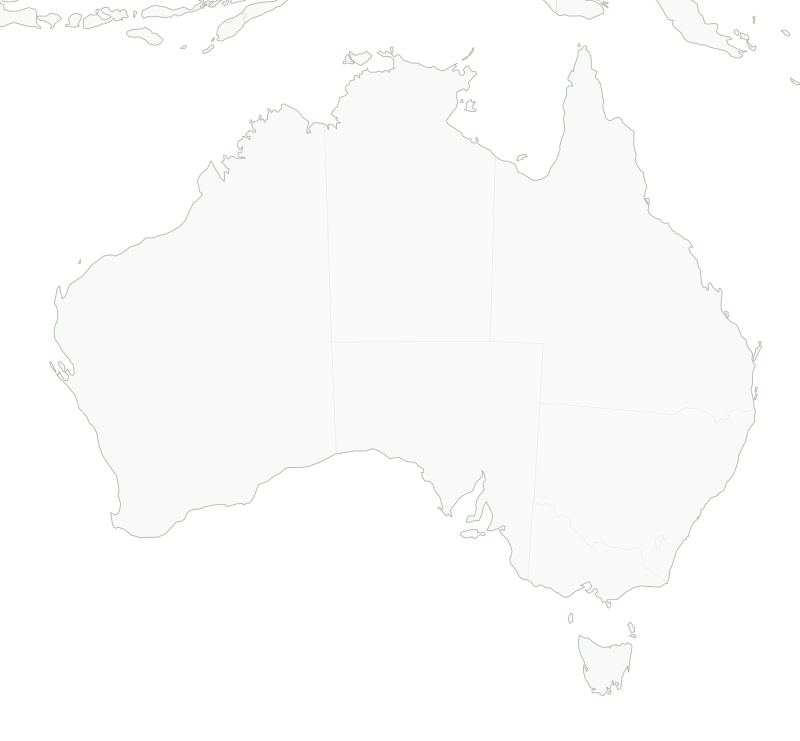
On the map
The major farming areas.
Key
- 1WA Wheatbelt
- 2Riverina
- 3Darling Downs
The markers are illustrative: they show well-known major farming areas in the region. They do not represent assets, farms or partners of Frontier Asset Partners. Base map: Natural Earth (public domain).
Other regions
Explore the other two continents.
North America
Public data on soils and land prices, in a mature market.
South America
From the Cerrado to the Pampas, two crops in a single season.